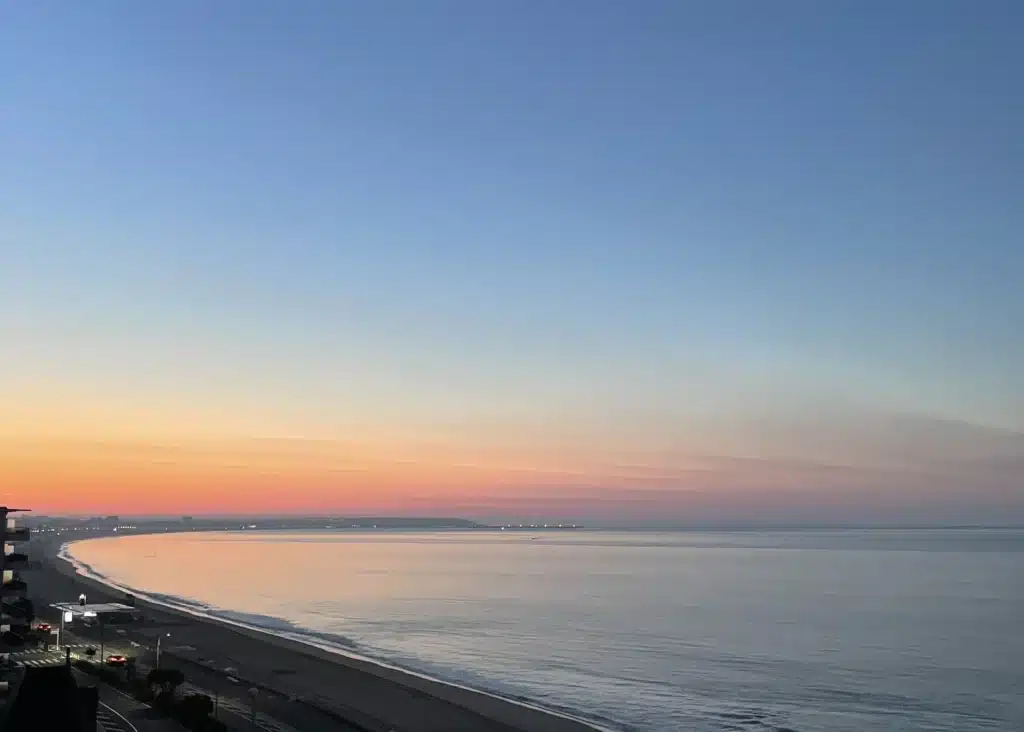

Along the Atlantic coast, there are places where the ocean reclaims all its rights. The Côte Sauvage is one of them. Here, there are no more large sheltered beaches or bustling embankments: only rock, wind, sea spray, and preserved nature to be discovered along the trails.
Depending on the area chosen during your visit, the Wild Coast unfolds between Le Pouliguen and Le Croisic, at the immediate gates of La Baule, or further north on the Quiberon Peninsula. Two settings, one promise: raw panoramas, remarkable biodiversity, and the rare feeling of walking as close as possible to the element.
From Amoria Hotel, it's an ideal nature escape: you leave the gentle bay for a walk, and return to the calmness of your stay with your head full of images. To extend your discovery of the resort, also find our guide for Visit La Baule.
A protected natural area in the heart of the Atlantic coast
The Wild Coast is no ordinary beach: it is a sensitive natural area, shaped by centuries of wind and swell. Granite outcrops, sculpted by erosion, rise from the land, while sea spray deposits salt on low-lying, resilient vegetation. The atmosphere here changes with the weather: bright and calm in good weather, spectacular as soon as the sea picks up.
It is precisely this intensity that makes it a place to be respected as much as admired. The granite terrain, the strong winds, and the power of the ocean demand caution and attention, especially at the cliff's edge.
A landscape sculpted by the ocean
Along the path, the coastline reveals its treasures: natural arches, sea caves, small coves nestled among the rocks, and swells that break with an impressive roar. Each point offers a new perspective, each tide redefines the scenery.
It's a living landscape, never quite the same from one visit to the next—one of the great reasons to return.
Remarkable biodiversity to preserve
Behind its beauty, the Wild Coast harbors fragile environments. Some areas are protected, others regulated, in order to preserve the coastal flora and the species that nest there. On the ground, the role of local associations and nature reserve managers is essential in raising visitor awareness.
- Stay on the marked trails to avoid trampling the vegetation
- Respect restricted or prohibited access areas.
- Do not take anything (plants, shells, pebbles)
- keep dogs on a leash, especially during nesting season
Exploring the Wild Coast on Foot: The Most Beautiful Routes
The best way to discover the Wild Coast remains by walking. The mythical coastal path GR®34, the old customs path, runs along the coast and offers a succession of panoramas. The sections vary in difficulty: some are accessible to everyone, others are more challenging, with rocky passages and elevation changes.
For gentler city routes, also take a look at Our most beautiful walks in La Baule.
From Pouliguen to Croisic: Mythical Cliffs and Viewpoints
At the gates of La Baule, the stretch connecting Le Pouliguen to Le Croisic offers some of the most beautiful viewpoints on the coast. Here, you'll find a succession of coves, rocky points, and open panoramas of the Atlantic.
Among the must-see stops, one often cites Pointe de Penchâteau, the Pointe de Chémoulin or else the Sphinx Bay, near Le Croisic — all perfect stops for a breather and to observe the horizon.
On the Quiberon Peninsula: the wave path
Further north, the Quiberon peninsula shelters the other great Wild Coast, arguably the most spectacular in southern Brittany. The trail runs along a succession of emblematic sites such as Port Bara, White Port or the surrroundings of the Château Turpault. The waves crash between the rocks in a striking setting.
Count a day trip if you're leaving from La Baule: the journey is largely justified by the beauty of the place.
Practical tips for a successful outing
- Consult the tide times before you leave: some passages close at high tide
- anticipate the wind, often strong on the exposed coast
- Put on your shoes properly: the rocks can be slippery
- Keep your distance from the edge of the cliffs, which are unstable in places.
- Pack water, sunscreen, and a windbreaker.
The Amoria Council: Depart in the early morning. The light is softer, there are fewer people, and you'll enjoy the most beautiful spots in peace before the crowds arrive.
Discovering the Wildlife of the Wild Coast
Seabirds: True acrobats of the wind
The Wild Coast is a prime observation spot for seabirds. Gulls, cormorants, and terns play with the updrafts, offering a constant spectacle for those who take the time to look up.
Observation is always practiced from a distance, without disturbing the colonies, especially in the spring during nesting. Binoculars are enough to turn a simple walk into an ornithological outing.
Under the Surface: Small Animals of Ponds and Rocks
At low tide, the rocky shores reveal a hidden world: crustaceans, sea anemones, and small fish sheltering in tide pools. It's an ideal place for children to discover nature, provided they adopt the right practices.
- gently replace each stone that was lifted back in its place
- Do not collect observed animals
- limit trampling in the richest areas
A flora adapted to wind and salt
Heather, gorse, and salt-tolerant plants
The flora of the Côte Sauvage is a champion of adaptation. Heathers and gorse color the moors with the changing seasons, while halophytes withstand the salt and wind where few species could survive. In spring and late summer, the color contrasts are magnificent.
Why you should stay on the trails
This vegetation plays more than just an aesthetic role: it stabilizes dunes and soils, retains sand, and protects the coastline from erosion. Stepping off the paths, even by a few meters, permanently weakens these balances. Staying on the marked trails gives these landscapes a chance to remain intact.
The most beautiful photo spots on the Wild Coast
For photography enthusiasts, the Wild Coast is an inexhaustible playground. Here are a few sure bets:
- the natural arches and caves, enhanced by the low morning or evening light
- Rocky points facing a rough sea, to capture the power of the waves
- sheltered coves, perfect for more intimate shots
- heather and gorse moors in bloom, for colorful foregrounds
- the sunsets over the Atlantic, a signature of the coast
The Amoria Council: The most beautiful photos are often taken in changing weather. A cloudy sky, a sudden break in the clouds, or rough seas give much more character than a vast, uniform blue sky.
Outdoor activities to practice while respecting the coast
Nature observation and guided tours
To understand what you're looking at, nothing beats a guided outing. Ornithology and maritime heritage discovery outings are regularly offered in the area: an excellent way to go beyond a simple stroll.
Surfing and water sports in authorized areas
The waves of the Côte Sauvage attract watersports enthusiasts, but caution is advised: strong currents, rocks, and dangerous swimming outside of supervised areas. This activity is reserved for experienced individuals and authorized sectors. For more accessible activities, La Baule Bay remains ideal: find our water activities.
Sustainable picnic with an ocean view
What's better than a break with a view of the horizon? So that the pleasure leaves no trace: we favor reusable containers, we take all our waste with us, and we settle on already developed areas rather than on fragile vegetation.
Practical information for visiting the Wild Coast
How to get there and accessible trails
From La Baule, the Côte Sauvage of Le Croisic is easily reached by car, bicycle, or local transport, with main starting points in Le Pouliguen, Batz-sur-Mer, and Le Croisic. The Quiberon peninsula, being further away, is better planned as a day trip. Complementary nearby ideas: A day in Le Croisic.
Local safety and regulation
Two golden rules for the Wild Coast: keep your distance from the edge of the cliffs, and never swim outside of designated lifeguard areas, as the currents there are particularly treacherous. Respecting local signage is the guarantee of a visit that is as beautiful as it is safe.
The Côte Sauvage Park, a unique and timeless place
La Côte Sauvage is the other face of the Atlantic coast: wild, alive, preserved. A place where you come to seek fresh air, mineral beauty, and the feeling of having, for a moment during a stroll, an encounter with what's essential.
And this is just the gateway: the Côte d'Amour is full of other natural places to explore, from the Guérande salt marshes to the charming neighboring ports. Perfect for a stay combining wild ocean and seaside tranquility.
The Amoria moment
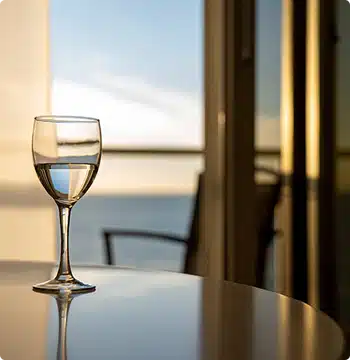
After the crisp air of the Côte Sauvage, returning to Hôtel Amoria makes perfect sense: a moment at the’wellness space to relax the legs, a glass of Madame A facing the bay, and the gentleness of a quiet night. Raw nature by day, 4-star comfort by night: what if your next nature getaway started here?